
Jun 30, 2026
Japanese Summer Festivals: Gion Festivals
Japan has hundreds of summer festivals each year. They may all seem similar, with many overlapping features, but many festivals belong to distinct families with their own stories and traditions. For example, Tanabata Festivals, Yasaka Festivals, Firework Festivals, and more. One of the most historically important festival families is Gion. So what exactly is a Gion Festival, and why does it hold such a central place in Japan's summer traditions?
Gion festivals trace their origins back to 869 CE, when Japan was suffering from a devastating epidemic. To calm the vengeful spirits believed to be causing the illness, the imperial court held a purification ritual called the Gion Goryō‑e. Sixty‑six halberds, one for each province, were offered at Shinsen‑en in Kyoto, and prayers were made for protection. Over time, this ritual became associated with Gion Shrine, later renamed Yasaka Shrine, dedicated to Susanoo‑no‑Mikoto, the storm and disease‑banishing deity. This is why Gion and Yasaka festivals feel so similar today: they are essentially the same tradition, with Gion as the original ritual and Yasaka as its shrine-based identity that later spread nationwide.
As the ritual grew, it developed into the grand Gion Matsuri, now one of Japan’s most famous festivals. Its influence spread nationwide, inspiring local versions in towns across Japan. Today, Gion festivals are known for their elaborate floats, processions, traditional music, and summer purification rites. Some communities hold modest versions, while Kyoto’s Gion Matsuri features towering, elaborate yamaboko floats. No matter the size of the Gion festival, they remain deeply spiritual at their core and are a beloved celebration each summer.
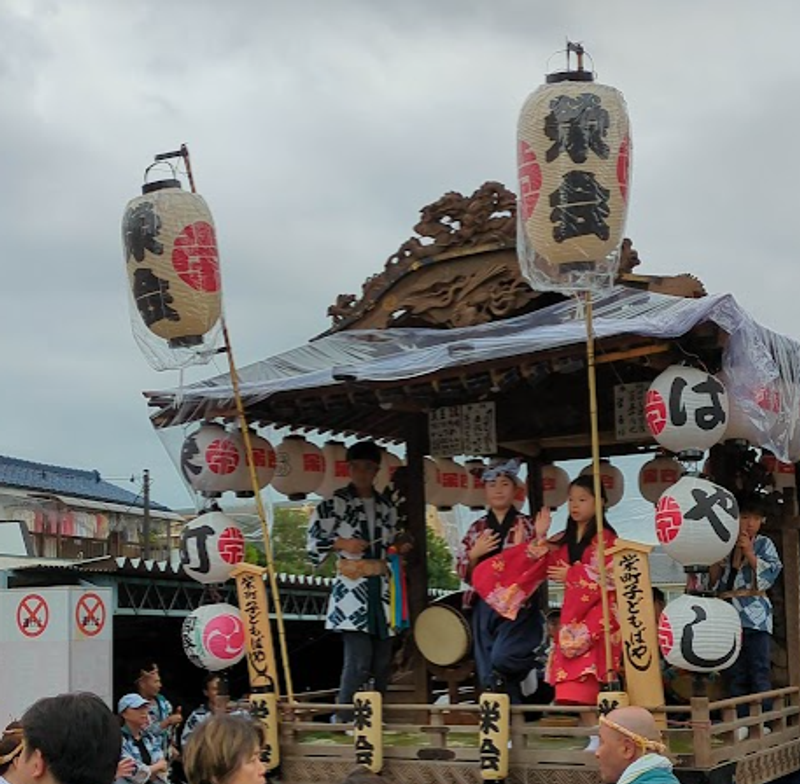
A festival float at a Gion Festival in Okegawa City, Saitama Prefecture.

Irish, Mom of 4, currently also living beside the In-Laws. 25+ years back and forth between Ireland and Japan! I also write on my personal website: insaitama.com

0 Comments