
Jun 25, 2026
It's more about the rainfall when a typhoon hits
When a typhoon hits, we worry more about the rainfall than the wind. Don't get me wrong - the winds can still cause serious damage, blowing trees and utility poles down, even overturning cars or trucks on occasion, but it is always the rain that does the most damage.
There have been countless examples over the years, where the typhoon itself did minimal damage as it passed through, but most damage arose afterward due to the rainfall causing floods and landslides. Even when the strongest winds stay offshore, a typhoon can still bring intense rainfall, flooding and landslides. In Japan, many of the most serious impacts come from the rainbands that linger before or after the center passes, rather than the peak winds.
Typhoon Hagibis, taifu No.19 in 2019, is a prime example of a super typhoon that didn't do as much damage as it passed through but caused catastrophic damage in the following days. In the photo below, the strewn items you can see on the embankment weren't deposited there by wind. These items, including the tractor, were shifted here by a flood that happened hours after the typhoon had passed.
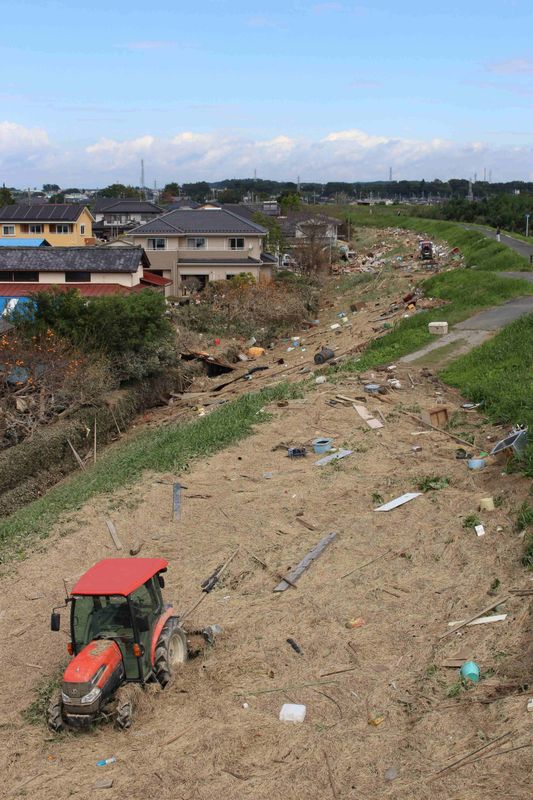
That is why you need to be vigilant for hours and days after a large typhoon or a double typhoon has passed through. In Japan, many typhoon‑related deaths occur after the storm has passed, when people encounter flooding, swollen rivers, or landslides caused by the typhoon’s lingering rainfall. This is why emergency warnings and evacuation orders aren't lifted straight after the typhoon has passed, but often hours, even days later.
So please do be careful and vigilant after the typhoons have passed, particularly if you live in a hilly area where landslides may occur or near a river where flooding may occur. Stay safe everyone.

Former nickname was "Saitama". Changed it to save confusion on place review posts! Irish, 20+ years in Japan! I also write on my personal website: insaitama.com

0 Comments