
Dec 7, 2025
Differences between Australia and Japan: Christmas decor vs. New Year's decor
Growing up in Australia, the weeks before Christmas usually meant one thing, and that was neighbors perfecting their outdoor light displays. Some houses would have things like Santa inflatables, reindeer silhouettes made from timber, and a bunch of colorful bulbs, and we'd often go on little trips to see streets which had just about every house lit up. As an adult, I'd pity their electricity bills, but I'm sure they derived a lot of joy from decorating.
I feel like here, the atmosphere is pretty different. Of course, lights and seasonal events exist, but the real focus is on welcoming the New Year. Instead of fine tuning light displays and sometimes kitschy decorations, families begin preparing traditional decorations that carry meaning, protection, and hopes for good fortune in the year ahead. It feels less commercial and more intentional, at least to me.
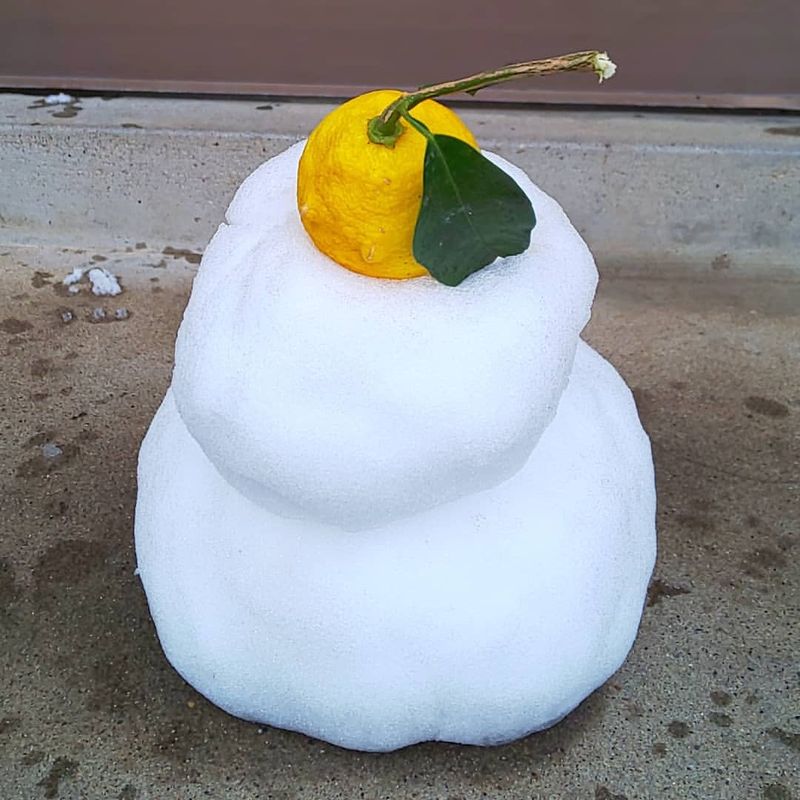
What I dubbed the "kagami snow-chi", a snowy version of the popular kagami mochi New Year's display.
One of the first signs that the season is shifting is the appearance of kadomatsu, a pair of arrangements made from pine and bamboo (and sometimes plum branches). They're placed at entrances to welcome good spirits and represent longevity, strength, and vitality.
You'll also often see shimekazari, which are small braided straw wreaths hung above doors. These mark the home as purified and ready for the New Year, keeping out misfortune while inviting good luck inside. Some of them are simple, while others get a bit more involved and include things like paper strips, citrus fruits, or fern leaves.
Inside, many households display kagami mochi, which is made up of a stack of two round mochi topped with a small citrus fruit. Last year I saw someone had made a kagami snowchi (a snow version of kagami mochi!) in our neighborhood, which made me smile!
Do you decorate more for Christmas, New Year, or somewhere in between and equally for both?


0 Comments