
May 24, 2026
English Language Matters - teaching community lessons
As a former ESL instructor in my native Canada, I had an enriching experience teaching immigrants and refugees. It was challenging for me to adjust to diverse levels of English and needs. Some of the courses I was assigned to teach were for true beginners, people who were encountering foreign language education for the first time. Other courses were for proficient students under pressure to achieve scores on standardized tests such as TOEFL and TOEIC.
I've been teaching in private high schools for most of my Japan-side career, so it was a bit intimidating to take on an adult EFL course. But here we go!
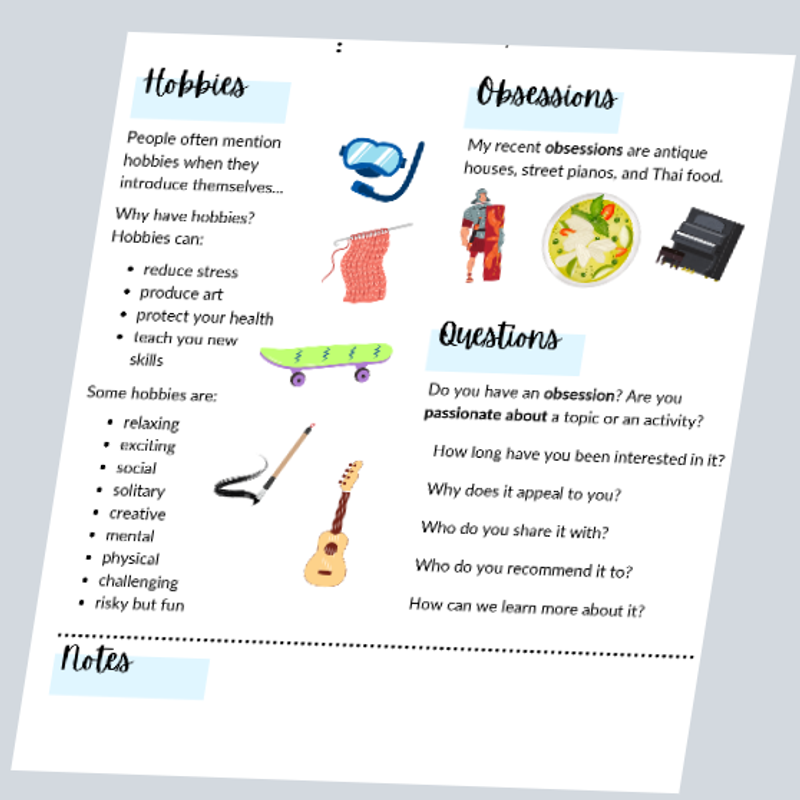
Handout I made to draw out experiences and spur communication
This spring, a 国際交流協会, a kokusai koryu kyokai, in a neighbouring city asked me to instruct a course for residents. I have to admit, I'm allergic to the idea of 英会話, eikaiwa, English conversation. Call me a snob, but I come from the TESOL field and a country that regulates language instruction. In contrast, in Japan, as long as you hold a business license or head a community organization, you can run foreign language courses.
So I bit my tongue and had a go. The students warmly welcomed me, and I asked them about their needs and their previous experiences. One issue was that they'd inherited a textbook from the previous teacher. Not all content is culturally relevant to all members, so I riff and omit tasks and adapt as necessary.
One aspect that surprised me is the needs of the students. Among the half-dozen who attend, three have relatives abroad, and two anticipate long-term experiences in countries where they need to use English.
For novice and old hands like me, this is a good experience to connect with your community and share language.
Do you teach a community English class? What resources do you depend on?


0 Comments