
Mar 17, 2022
Gallery
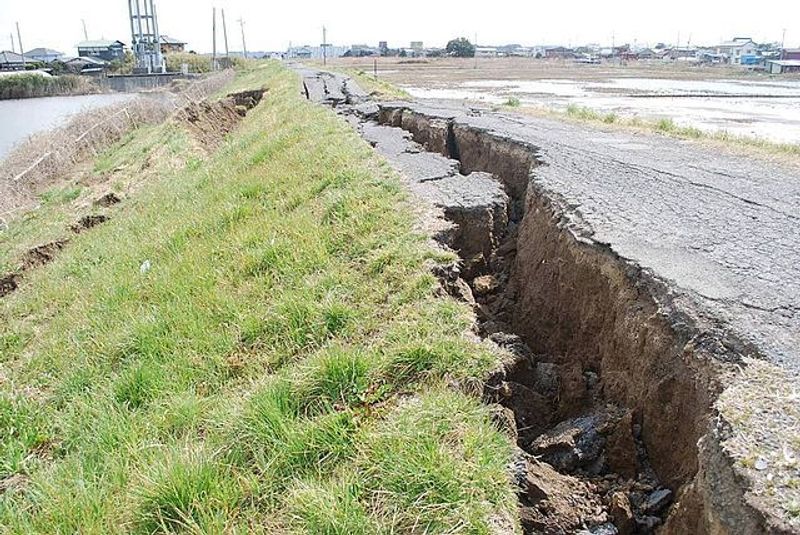
Late on Thursday evening, I was tucked into my futon when the first shock of an earthquake rippled through my building. I was startled awake and didn’t panic. The wood-frame building flexes a lot in an earthquake, and the land on which it stands is quite stable. But then the second shock was preceded by a deep rumble. Whether it was audible or infrasound, I can’t say. But it was ominous and I knew a big shake was coming in seconds. A crack caused by the March 11th, 2011 earthquake photo Katorisi I reached for my mobile device and between the rolling shake and my racing heart, I had a hard time tapping in the password but managed to immediately tune in to NHK Radio. This is one of the first sources of information in an emergency, all Japanese of course. For me, my listening comprehension is high but my reading is weak, so my go-to is the radio. I was uneasy, but I was relieved to have access to information fast. The broadcast was alarming as the announcer was audibly mentally shaken but to his credit, he persevered. This was a seriously big earthquake with a tsunami threat, a magnitude 7.4 tremor that killed some people. Your bug out bag Two years ago, I told you how to pack a bug-out bag, Japanese style. My first thought as the tremor subsided was about this bag of stuff that I can grab and go to a shelter if I have to. Fortunately, I am far from the epicenter. Information in an emergency I don’t have a TV or a radio, but I can still get information in either Japanese or English fast. One source I turn to often on my mobile device is NHK World which broadcasts on their website in English in case of a disaster. NHK Radio over the internet was the first source I turned to. If your Japanese listening comprehension is high and you need local information in a hurry, NHK Radio’s Rajiru app is a good source. NHK Radio broadcasts emergency information within seconds of a major event. I could easily catch information about my prefecture - power outages, tsunami warnings, and local conditions. Advice from your embassyEmbassies in Tokyo have comprehensive information about disaster preparation in Japan. While your country is responsible for you to some extent, all indicate that you must be prepared to rely on local information and disaster response. I'm impressed with the Canadian Embassy which urges Canadian residents to register. The US Embassy has a lot of disaster preparation guidance relevant to anybody in Japan. How to get a message outKeep your mobile devices powered up at all times. Even in really bad situations, Japan's communications are reliable and you can get word out on your situation to friends and family abroad. If you're on the wrong side of a severe earthquake disaster and don't have internet or network access, NNT East has an emergency message system. Also, Japan has emergency wifi in event of a disaster, 00000Japan.