
Mar 17, 2022
Gallery - Red-crowned Cranes - Ainu Kamuy
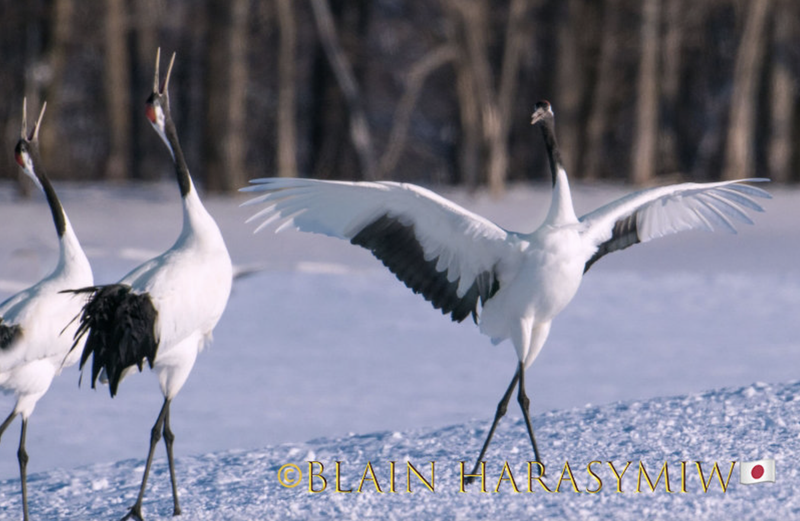
The Red-Crowned Cranes are known as snow ballerinas because of their courtship dance. Non-birders believe that ballet was inspired during the Italian Renaissance with Catherine de' Medici's influence. However, First Nation's People globally and many birders have an entirely different perspective. We believe the origin of human ballerinas can be traced back to the grace of birds and their courtship dances, specifically the Red-Crowned Cranes or snow ballerinas. In essence, all incarnations of dance have some roots in the natural world. In Hokkaido, the Ainu recognized the influence and have a particularly representative ancient ceremonial dance called the Sarorun Rimse (Crane Dance), mimicking the movement of a crane. The Red-Crowned Cranes choreographed courtship dance begins with a bow to one another, then they raise their heads towards the sky and call in unison, the fluting call of the one or two pairs often inspires other Red-Crowned crane romantic performers to join in the professing call of love and devotion. The pair or the entire flock will leap into the air at the same time commencing the mating ritual dance. Tanchos mate for life, and their ritual courtship dance is legendary. The First Nations people of Japan, the Ainu, express their appreciation for the natural world with dance, and one of their traditional dances is modeled after the mating dance of the Red-Crowned Cranes. Nationally Designated Important Intangible Folk Culture Asset Registered UNESCO World Intangible Heritage People have always danced and sung, whether for ceremonies, when family and friends gathered, or just during their daily work and lives. The ancient ceremonial dance of the Ainu expresses happiness and sadness, and is performed not merely for entertainment but to show respect and gratitude to the kamuy (gods and spirits) and their ancestors. The dances of the Ainu were born from coexisting in the natural world and represents sentient beings such as brown bears, birds, specifically The Blakiston Fish Owl, the Red-Crowned Cranes and all wildlife, insects, and even under and including the sun, moon, stars, and sky. Essentially, we are traveling through the universe and striving for a naturally struck balance. Ainu dances include large group ring dances, small group dances to offer prayers to the spirits, dances to show gratitude for successful fishing and harvests, dances to drive away evil spirits and sickness, and each dance serves a specific purpose depending on the kamuy or spirit that is being praised. After about a 30 minute performance, I go outside to witness the Iomante Fire Festival, and each evening during February there are fireworks.