
Sep 3, 2020
A book recommendation for those who are working in Japan
My workplace in Japan is made up from people from all corners of the globe. We have staff who are Japanese, as well as plenty of expats, including folks from the United States, various countries in Europe, China, Singapore, Bangladesh, the Philippines, and myself from Australia. Hopefully I’m not forgetting anyone - but as you can see it’s quite the diverse mix of nationalities and cultures.
It’s really enjoyable for me being able to collaborate with coworkers from different places, but one thing that becomes apparent quite quickly is that the countries we’re from really impact the way we communicate and how we get things done. A book that I read recently is titled “The Culture Map: Decoding how people think, lead, and get things done across cultures”. You can find it on Amazon here, and I think it’s a really great read for anyone who is working in Japan, or anyone who takes an interest in human relations and cultural differences.
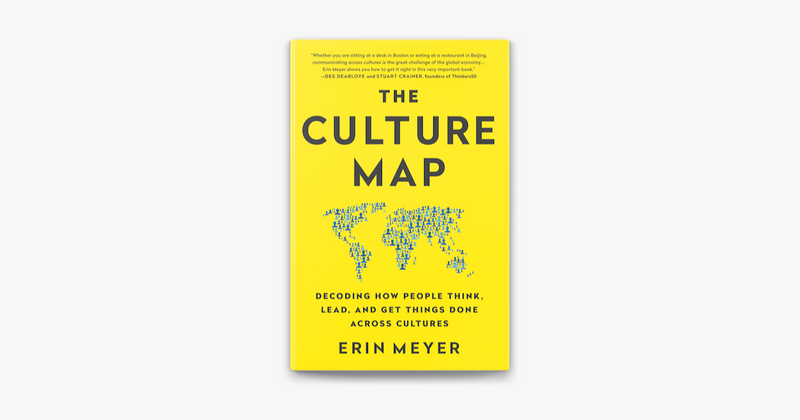
One thing that really stood out to me was that messages in Asian cultures are often conveyed implicitly, whereas in places like the United States, people are trained to communicate as literally and explicitly as possible.
There was an excerpt in the book which reminded me of Eli’s recent blog about reading the air - it came from a Japanese HR Executive who was living in the United States. He noted that picking up on what isn’t said, rather than what is said, is of paramount importance here in Japan. The book also mentioned the difference between low-context and high-context communication styles across countries. It’s in line with that idea of implicit and explicit communication - a high-context culture would be representative of Japan since so much is based on traditions, body language, and facial expressions. In contrast, my home country of Australia is a low-context culture, where things are spelled out quite clearly verbally - there’s really no need to second-guess what someone’s saying since people are for the most part straight-forward and to the point. It’s certainly something to keep in mind when working in a different work environment than what you may be used to.
One last notable thing that the book mentioned about Asian work environments is that idea of hierarchy underwriting many decisions. My workplace is quite internationally-minded, in that we do have direct access to our bosses - I feel comfortable interacting with them, asking for their opinions, and seeking guidance. Also, I feel like my ideas are taken on board rather than immediately discarded simply because I'm beneath them on the work ladder. I'm curious to hear how others who work in more traditionally-Japanese settings feel about interacting with their bosses.
How is your work culture here in Japan? Does it feel very high-context compared to what you may be used to back home?


0 Comments