
May 11, 2022
How to Hang A Taxidermy Fish in Japan
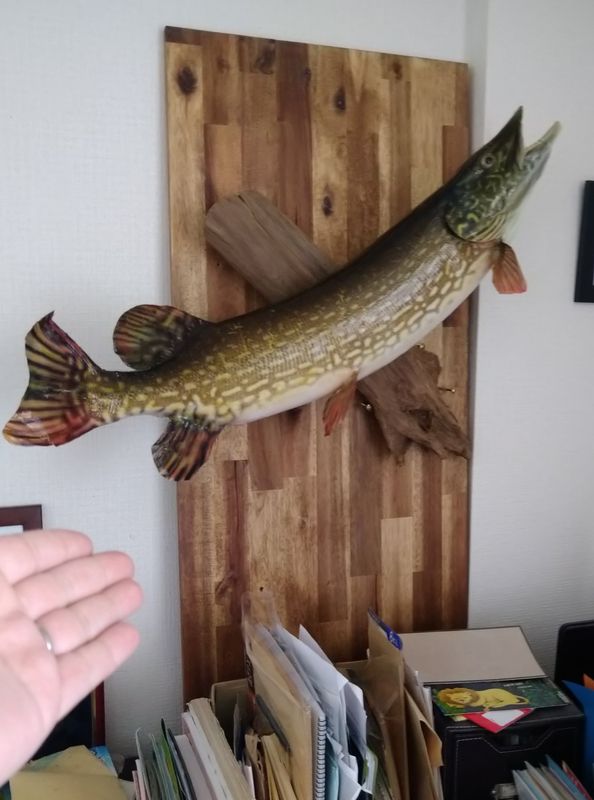
Some people in Japan have large, potentially heavy items that they might want to hang on a wall, but many Japanese homes do not accommodate such options. In addition to concerns regarding accidentally puncturing a pipe or electric cable when putting a nail in the wall to hang something from, many Japanese apartments are meant to be left exactly as they were received, spotless and without even small holes in the walls. When my husband caught this glorious fish and my father decided to have it converted into taxidermy, the concern for how we would hang it hadn't crossed my mind yet. When it arrived in the mail, my husband forbade me to drill or hammer anything into the wall, so the fish sat in a box for quite some time, waiting for us to get around to displaying it properly. In the years that followed, I developed the means by which I could hang the fish on the decorative piece of wood in a part of the room that doesn't get too much direct sunlight and without making any holes in the actual wall.
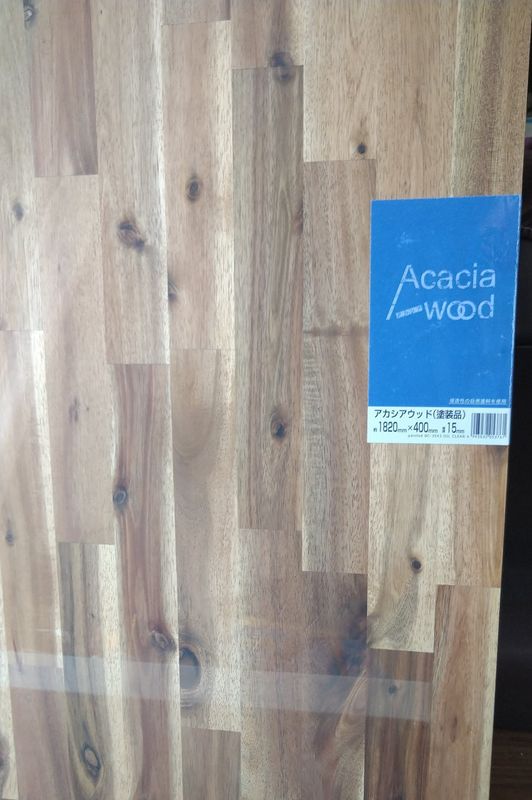
This involved getting a large plank of wood from a home improvement store. This plank of Acacia wood measures 180 cm by 40 cm. Some other similar stores will likely have similar items if you go into the woodworking section, usually an outdoor area located to the side or back of the main shopping space. The section at my store included planks of several different kinds of wood in a variety of sizes. I chose this lovely plank of acacia wood because I liked the coloration. It is important to measure the space you plan to put your plank in before you shop so you know what you're looking for. The strongest warning I should give here is to stay away from particle board, the cheap wood-substitute made from a few sheets of ply-wood stuck together. That kind of plank does not do well with holes being introduced into any place where there was not already a pre-formed hole. Real wood will usually deal with a screw or a nail. Particle board will fall apart. I learned this when trying to alternate where shelves would go on a particle-board shelving unit.
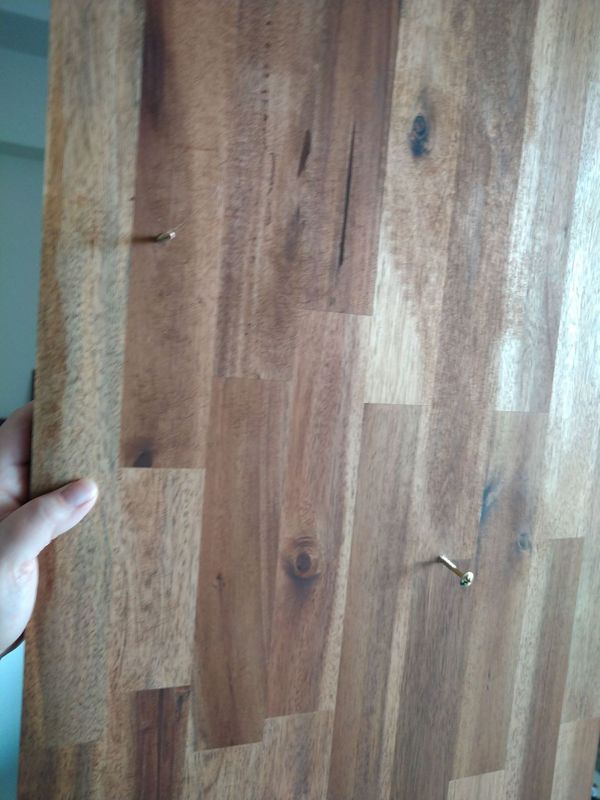
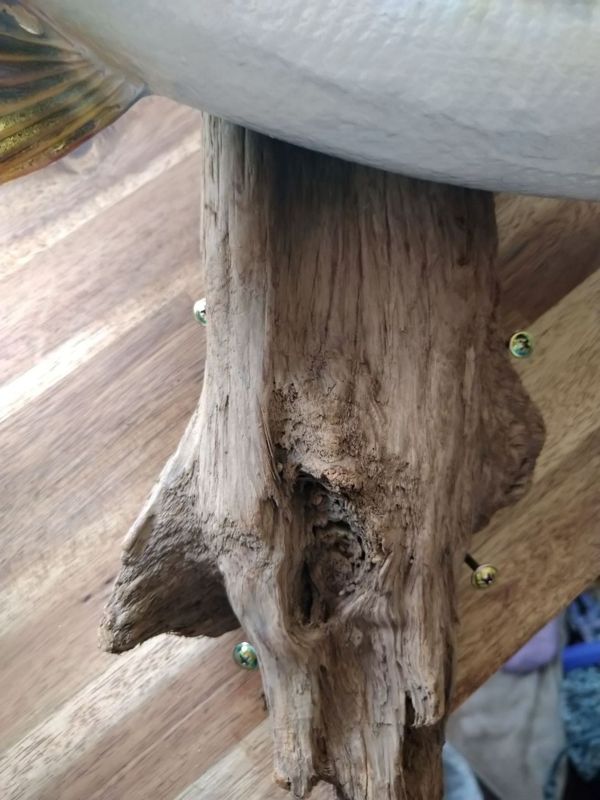
When I got at home, I checked for which side looks best and then realize that one side of the wood was already pretreated and glossy, meaning that the makers of this plank had already designated which side should be the front. With that in mind I picked the spot that would align well with my Taxidermy fish and used a small baggie of screws that I found in the same woodworking section, right next to the planks. Originally I thought it would be best to use the massive screws that came with the fish to connect the fish directly to the plank, but on later inspection, I realized those screws were so long that they would likely go all the way through the fish and come out the other side. The fish was meant to be mounted on a small but thick chunk of wood that it came with, so that's what I did. After I got the fish on the small chunk of wood, I used some trial-and-error to mount the wood chunk on my plank. I secured it with many screws, some of which don't seem to be doing anything right now, but I think they might help to keep it in place.
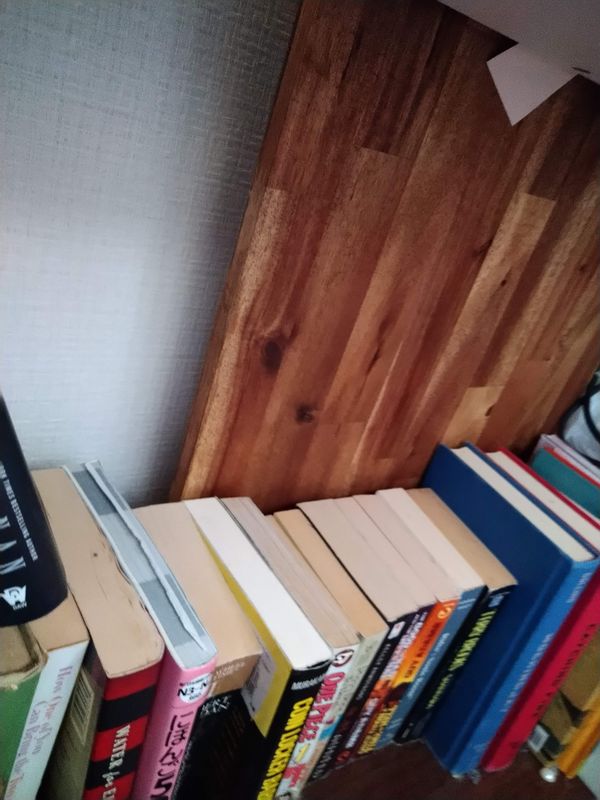
I positioned the plank behind a heavy desk that isn't flush with our multi-level wall. I placed a few heavy books behind the plank on the floor, forcing a little bit of space between the base of the plank and the wall. This means that the plank spends most of its time reclining backward slightly, and in the event of a quake, it is most likely just going to slam against the desk and then back against the wall. If the fish should fall, it will do so only be a couple of feet and into a stack of papers that never seem to leave the desk, even after major quakes.
A few weeks after I hung the fish, a massive magnitude 7.4 earthquake shook my prefecture and to the shock of everyone in the apartment including myself, the fish was fine. I had been a bit worried that my precautions wouldn't be good enough, with me not being a proper engineer and literally using large books as spacers, but at the end of the day, our fish stayed in place.
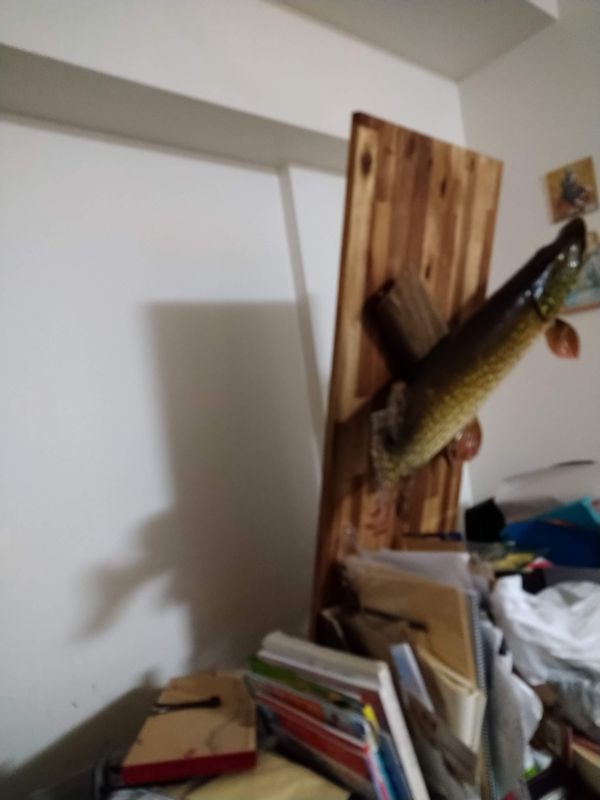
After the quake. Moved? Yes. Fallen? No. Huzzah!
So there it is.


0 Comments