
Jun 2, 2020
6 things to consider if you're moving to the Japanese countryside
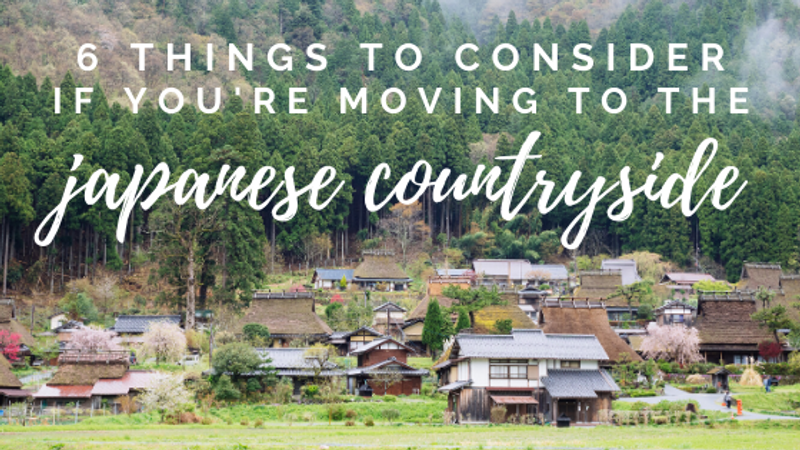
My family and I have lived in Japan now for the better part of a decade, and three of those have been in a small countryside town in the mountains of Niigata. Before that we lived in metropolitan Tokyo, but being outside an urban area in Japan can present some unique challenges for expats.
If you’re considering moving to the Japanese countryside, whether it be for work, family, study, or another reason entirely, here are some important points that we’ve had to consider.
Schooling
This is something pertinent to those who are moving to Japan with children - if you’re moving to a more rural area of Japan, you will need to consider the schooling options for them. In urban areas like Tokyo, there are a number of international schools like ASIJ (American School in Japan) or the New International School of Japan, but many of these international school options have tuition fees that are on par with what you’d expect to pay for a university education. In most rural communities, your schooling options are going to be in Japanese only. That hasn’t been an issue for us with our children still being quite young, but if you have older children you will have to take that into consideration - the transition can be much harder for obvious reasons.
Another point to consider about schooling options is whether or not your intent is to be in Japan permanently or short-term. If your spouse is Japanese, for instance, you may plan to make Japan your home base - in which case, it naturally makes sense for your children to be fluent in Japanese. If your time here is short-term and you will eventually end up back in an English speaking country, you’ll need to consider the logistics of what schooling options are available - and how your child will keep up with their English to be on-par with what would be expected back home.
Housing
First things first: Japanese housing, as many are already aware, is significantly smaller than that which many foreigners moving to Japan may be used to. Secondly, though, when moving to the Japanese countryside you will likely be faced with substantially less choice than in urban areas with the homes available. When we moved from Tokyo to Niigata, we saw three different realtors in the area we were moving to, who had literally two properties to show us. We have a dog, so that also limited our choice - some additional properties would have been available but we needed a pet-friendly option.
The first property we saw was shoebox level tiny, but the realtor seemed to think it was absolutely feasible for a family of four (plus our pup!) to live there.
The second place we saw was a 6DK that we ended up going for, so whilst space isn’t an issue, there are still some difficulties. It’s an older house, probably built in the 70’s, and the house doesn’t have any insulation at all. It’s expensive to heat in winter, and we live in "snow country" so it gets c-o-l-d. Then the reverse problem: it’s nigh impossible to get it feeling cool in summer, apart from the two rooms that have air-conditioning. Fans can only do so much! Be prepared for limited options being a distinct possibility, and for housing standards to be different.
Medical appointments and access to medical facilities
Another factor that can present challenges to countryside living in Japan is access to medical facilities and navigating appointments. In Tokyo, there are a multitude of GP clinics and even specialists that operate in English. I had no trouble finding appointments with doctors, dentists, OB/Gyns and even gastrointestinal specialists in the city. The countryside is a different story. My dentist, for instance, speaks enough English for us to get by, but the dental assistants don't, so when they are doing my regular cleanings there's a lot for me that ends up lost in translation. Yes, this is my own fault for not being more proficient in Japanese, but it is something for those without a strong foundation in Japanese to keep in mind.
From where I live in Niigata, it's easy enough to commute to Tokyo for anything that can be scheduled in advance, but it's important to consider potential emergency situations. We live only five minutes from Uonuma Kikan, a large hospital in Niigata, which we're thankful for - but most of the staff only speak Japanese. Again, we expect this, and don't expect to be catered to in English, but just be prepared for sometimes getting through things courtesy of Google Translate.
Work options for yourself or your spouse/significant other
It's likely that if you're moving to the Japanese countryside, that you already have a job lined up - and if you do, fantastic! We moved out here for my husband to complete some higher education and he had a student stipend to cover most of our major expenses. We still needed to find some work though, and that's another factor which has presented challenges.
One thing you may find luck with in regional or rural locations is English tutoring - my husband runs a regular class with a group each week. I managed to get a small part-time position with a travel company after writing content for their website and being involved with a few other freelance projects for them. Some of the other international students or their spouses here work for a local food production factory, which involves packing different processed meals. No Japanese is required for those roles, so it's convenient for folks who may not have a native-level grasp on the language which is required for so many roles. Carefully consider your finances and a budget before moving to the Japanese countryside, and where possible, ask someone locally about costs. I had no idea that heating and cooling our house would be so expensive, for example, and that really threw us for a loop.
Local activities for enrichment and connection with others
What are your hobbies and interests, and how is countryside living going to be conducive to those? My family and I love traveling, for instance, so we're grateful for countryside life because we've been able to explore a side of Japan that most people wouldn't. We also love reading, but don’t have access to English-language bookstores like we did in Tokyo - but thankfully, ordering online is easy!
We have a wonderful international community here in Niigata because of the university here, so we’re not wanting for activities - there are regular things scheduled for particular hobbies (tennis, yoga, soccer, etc), and even events for families which blend a bunch of different cultures together. If the international university wasn’t here, I think the landscape for connecting with others would be quite different, as overall our area has an aging population and not many people at our stage of life. Most of our neighbors are older than my parents, and their own children have all packed up and moved to the city. Think of the life stage you’re at when you consider your move to the Japanese countryside, and what you need in order to feel enriched on a social level. Don’t forget: if you do move to a rural location, you could always be the one to start local events, too!
Access to daily life requirements: food, clothing, etc.
I don’t really like Japanese food (I know, I know), so living in a countryside location presents some challenges there. In Tokyo, I could have Italian one night, Mexican another, Indian the next...you get the drift. You have access to just about every cuisine your heart could desire in a big city, or access to international supermarkets for ingredients to recreate them - albeit at a price! In our neck of the woods here, we don’t have an international supermarket, although our local does have a small range of imported stuff because of the international university. I find that I crave cuisines other than Japanese out here more because I don’t have the ease of access to other cuisines and ingredients that I once did. Of course, Amazon Pantry does have some stuff you can order (like gnocchi - yum!), but you may have to get creative.
Another thing I have struggled with here in the countryside is clothing. Thankfully I’m short-ish, so I don’t have problems with the sizes so much as I do Japanese fashion. I’m a fairly basic kind of person, so Uniqlo is my jam, but the nearest one is in Nagaoka - a 45 minute drive away. At our local Aeon, the women’s clothes are very frilly, lacy, and a bit too “girly” for my tastes. If I really want to shop for my own clothes (and try them on in person), I usually go to Niigata City where they have H&M, Uniqlo, Zara, and Gap to choose from. If you’re particularly tall, you may find it a struggle to find what you need, especially with things like footwear. I have size 8 feet and I’m at the upper echelons of shoe sizes here - but that’s the case in the city, too! However, at least in the city you’ve got the ability to visit several stores in the one trip. Countryside living in Japan may have you relegated to just one or two.
Author: genkidesu

Greater insights and deeper experiences from voices in the City-Cost community.

0 Comments