
Oct 12, 2023
Gov’t announces intensive measures targeting source of Japan’s hay fever headache
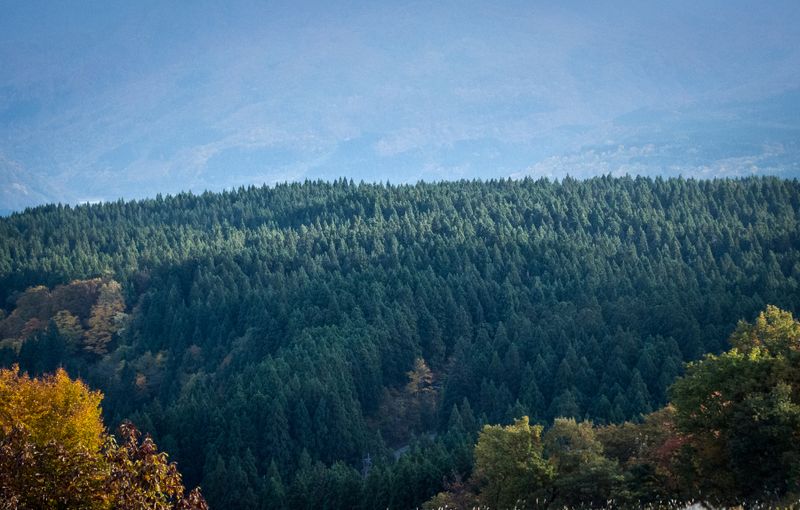
Promising news for those who suffer from seasonal kafunsho, or “hay fever,” allergies? The Japanese government on Wednesday introduced a number of intensive measures aimed at solving the country’s kafunsho allergy headache, with the main focus on promoting forestry to cut to the cause of the problem, cedar pollen.
With next year’s allergy season brought on by airborne pollen from Japanese cedar trees, or “sugi,” approaching, the fundamental measure for this fiscal year will be what the government described as “source control.” Authorities will establish priority areas for the logging of artificially planted cedar forests and their subsequent replanting with seedlings and other species that have a low pollen count.
The government also aims to increase demand for cedar lumber by promoting its use in the housing sector, a shift which will be facilitated by a revision of the Building Standards Law due to take effect in April 2024.
The latest measures will also seek to increase productivity in the forestry industry by addressing an expected decline in the labor force, including through supporting the introduction of high-performance forestry machinery and expanding the acceptance of foreign workers.
In addition to source control, measures will also include support for the private sector in improving the accuracy of pollen forecasts, as well as increased efforts to spread awareness of kafunsho control products and preventive actions.
Efforts by companies and organizations which introduce measures to prevent employees' exposure to pollen will also be included for evaluation in the Excellent Health Management Organization certification system - a system established by the Ministry of Economy, Trade and Industry to promote the health of the workforce.
The total area of kafunsho-causing artificially planted cedar forests in Japan is approximately 4.4 million hectares, around 2.4 million hectares of which is over 50 years old and ready for logging, according to the forestry agency.
In April, the Kishida administration held a ministerial conference on kafunsho, bringing together related ministries and agencies to establish a council to solve an allergy problem that continues to bring suffering and irritation to over 40 percent of the country.
The following May the council outlined a 10-year roadmap toward alleviating the suffering, which called for a 20-percent reduction in the area of artificially planted cedar forests by FY2033.
“Hay fever is a social problem that continues to plague many citizens. In this way, we will solve the social issue of pollen allergies and achieve regional development through the promotion of forestry,” Prime Minister Fumio Kishida said of the measures during a ministerial meeting on Wednesday.
Japan’s artificially planted cedar forests were created in order to preserve land and meet a strong demand for lumber after WWII. The forests have since become a major source of pollen.


1 Comment
BigfamJapan
on Oct 17
About time! I can't believe they left it this long to take measures. Better late than never I suppose.