
Jun 2, 2020
Guidelines issued for enjoying Japan's outdoors during corona era: Climbing, surfing
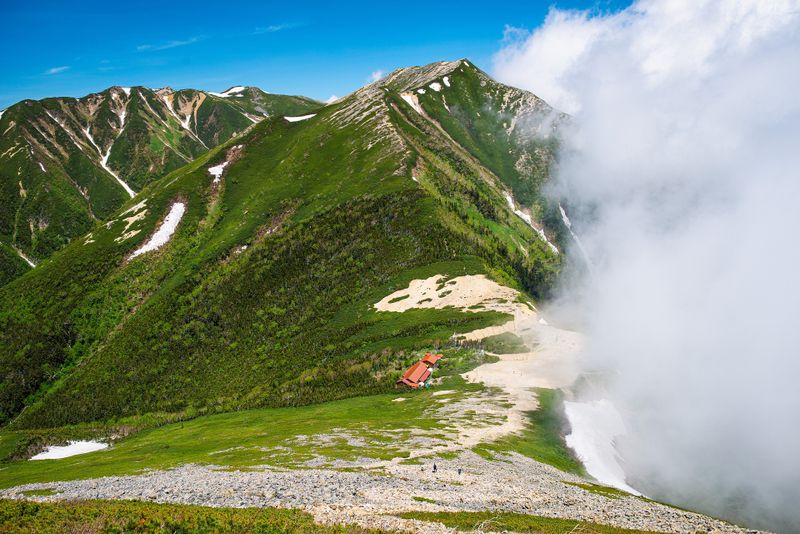
Following the lifting of the coronavirus emergency on May 25 for Tokyo and the remaining prefectures of Japan experts and authorities have been urging the public to adapt to a “new lifestyle” that even extends beyond the crowded confines of urban areas.
Guidelines issued by authorities in Japan point the way to a new lifestyle in which going through the motions of daily life is done so with an awareness of the coronavirus threat. In terms of leisure time, they encourage people to choose being outdoors over being inside.
Even for time spent in the great outdoors though, authorities have issued guidelines and measures to prevent any further outbreak or spread of the new coronavirus.
A joint statement from four associations in Japan involved in mountain activities was issued on May 25, the same day that Prime Minister Shinzo Abe declared the state of emergency lifted for the entirety of Japan.
In the statement -- issued by the Japan Mountain Guides Association, The Japanese Alpine Club, Japan Workers' Alpine Federation, Japan Mountaineering and Sport Climbing Association -- are detailed guidelines for mountaineers and climbers as to how they can help to prevent the further outbreak or spread of the Covid-19-causing new coronavirus.
Below is our own translation of those guidelines. This is not to be considered official and any vagaries may be more a reflection of our translation rather than the original text.
Guidelines for mountaineering / sport climbing activities following the lifting of the call for “self restraint”
1) Start with day trips within the prefecture (keeping the distance within 100km).
2) Do not climb if you are unwell (fever above normal temperature, chills, malaise, breathlessness, cough, etc.). Coronavirus infections developed after entering the mountains could be life-threatening and could also place rescue teams and staff at local medical institutions in danger.
3) Go mountaineering in small parties (limited to 5 people for the time being).
4) During the state of emergency changes in mountains caused by the seasons and earthquakes may have created unexpected dangers and the deterioration of mountain trails. Be sure to submit sufficient preliminary climbing route information, maps, coordinates, and mountaineering reports, and leave them with family members.
5) Wear a face mask while climbing. When wearing a mask, pay sufficient attention to heat stroke and dehydration, and be careful to drink water.
6) Maintain social distance when mountaineering and at climbing gyms. Generally social distance is considered to be around two meters, but it is said that more distance is required when climbing. Be aware of restrictions related to building structure, number of people, etc at climbing gyms and follow gym guidelines as well as policies regarding holding ropes, non-slip shoes, etc.
7) In order to prevent the infection of local residents visiting climbers should refrain from shopping in mountain areas and holding drinking parties after descent. Prepare food, beverages, emergency foods, etc. prior to departure.
8) Train the muscle strength and core that may have declined during periods of self-restraint.
Find the guidelines and statement in Japanese here.
The same four mountain associations issued a statement dated April 20, ahead of the Golden Week holiday period, appealing for climbers across Japan to stay off the mountains as cases of the new coronavirus escalated.
Despite the lifting of the coronavirus emergency across all of Japan, Mt. Fuji will be closed to climbers this summer. Authorities in Yamanashi Prefecture were the first to announce the closure of their one major route up the 3,776-m peak. Authorities in Shizuoka Prefecture announced the closure of their three major routes in mid-May.
Outdoor enthusiasts should also be aware that regional authorities and local governments may have issued their own coronavirus measures and guidelines regarding outdoor pursuits.
Authorities in Gifu Prefecture, for example, issued their own appeals to climbers and mountaineers following the lifting of the state of emergency. These include a request for climbers to put used tissues and plastic bottles (which may have come into contact with the mouth) into a sealable plastic bag and take them home.
Around 80 percent of climbers in Gifu come from outside of the region, according to the prefecture’s Crisis Management Department.
Throughout Japan’s state of emergency footage of the beaches west of Tokyo was broadcast regularly on news programs as a kind of benchmark upon which the nation’s self restraint could be measured, particularly on a sunny day. Footage of the beaches in Fujisawa City, in Kanagawa Prefecture, the weekend prior to the emergency was lifted showed a large number of surfers had already chosen to hit the water.
Authorities in Chiba Prefecture, home to a number of Japan’s most popular surf breaks, announced on May 28 the reopening of beach-front car parks that had been closed since early April in order to discourage surfers and other beach users from visiting towns along the coast.
The Nippon Surfing Association (NSA) on May 26, the day after the emergency was lifted, issued a set of guidelines for surfers which largely focus on conduct before entering / after exiting the water, particularly when using car parks popular with other surfers.
These “new surfing rules” read as follows (according to our own translation from Japanese):
- Go to the ocean alone, in small numbers
- Refrain from gathering on the beach, in car parks / move promptly
- If you are unwell, avoid going out / be careful not to cause accident or injury
- When on land wear face mask, wash hands frequently
- Avoid crowded breaks, crowded car parks
- Even in the water maintain appropriate distance from other surfers
- Avoid handshakes, minimize contact with others
- Take care when visiting local shops
Find a poster from the NSA displaying the new surfing rules here.
In the statement, the NSA also urged surfers to follow rules and guidelines as issued by local authorities, which they said might differ at each break.
In accordance with the central government’s phased relaxing of social and economic restrictions the NSA said that surfing events and contests in Japan will be held gradually until August.
“Surfing is a good sport for staying healthy. Enjoy precious time spent in the water while respecting the local community and each other," reads part of a statement from the Nippon Surfing Association following the end of the coronavirus emergency in Japan.
Ichinomiya in Chiba Prefecture is scheduled to host the surfing event during the 2020 Tokyo Games, with the sport making its Olympic debut.
How do you feel about heading out to enjoy Japan's outdoors at this time? Do you have any concerns about doing so or are you chomping at the bit to get out? Let us know in the comments below.
Related ...
Videos
"Enjoying Japan's outdoors: coronavirus guidelines issued"
Subscribe to the City-Cost YouTube channel here
Share your thoughts and concerns on life in Japan during the coronavirus pandemic with other foreigners living in Japan on City-Cost:



0 Comments