
Nov 1, 2022
Tokyo’s recognition of same-sex partnerships must drive social change say campaigners

On the day the Tokyo Metropolitan Government began issuing certificates in recognition of same-sex partnerships campaigners are urging local governments and the private sector to further support the drive towards equality for sexual minorities in Japan.
The so-called Tokyo Partnership Oath System which took effect from Tuesday is based on a partially amended human rights ordinance. The system is aimed at creating a more comfortable living environment for sexual minorities by reducing the difficulties which same-sex couples face in their daily lives, according to the metropolitan government.
Couples who are issued with a certificate through the new system will be able to apply for municipal housing services, be eligible to receive financial support in the event of disasters, and stay informed about their partner’s medical condition at municipal medical facilities, among other services and support.
The Tokyo Partnership Oath System is available to those adult couples of which at least one partner is a sexual minority. As well as those couples where at least one partner resides in Tokyo, the system also extends to those couples who live outside of Tokyo but at least one partner works or studies in the capital.
Certificates issued through the system, like similar certificates issued by other municipalities in Japan, are not legally binding with same-sex marriage yet to be legally recognized in Japan. However, the metropolitan government plans to work with local governments and the private sector in Tokyo to increase acceptance of the new certificates.
As of October 31 a list compiled by the government details 34 municipal services and organizations in Tokyo at which the new certificates are accepted. For the uninitiated, a glance through the list may highlight to some extent the challenges in gaining access to services and support that same-sex couples have faced, and many continue to face in Japan.
“We are very happy about the launch of the Tokyo Partnership Oath System, although it did take some time to get where we are today,” said Soyoka Yamamoto, who heads Partnership Act for Tokyo, a group of LGBTQ+ and their supporters who have been campaigning for Tokyo to establish a system of recognition for same-sex couples.
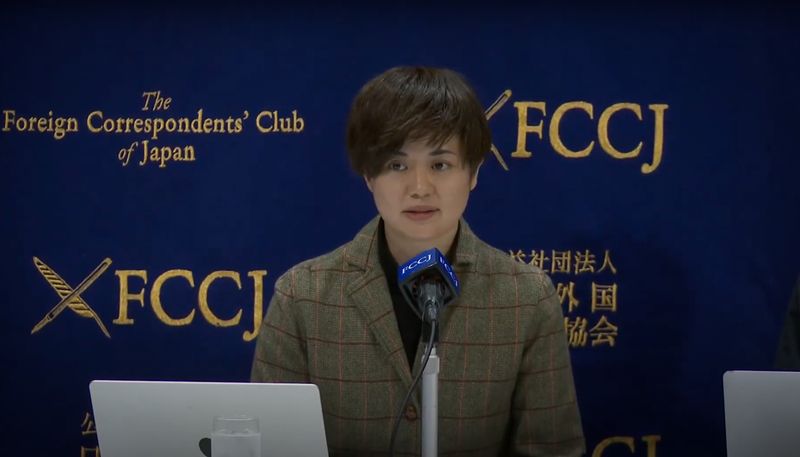
(Soyoka Yamamoto speaks during a press conference at The Foreign Correspondents' Club of Japan in Tokyo on November 1, 2022. - Screenshot taken during online conference.)
Yamamoto and her partner of over 10 years submitted an application for the certificate in October ahead of the system’s November rollout. Speaking at a press conference on the day of the launch, Yamamoto described the sense of recognition as “nothing short of pure happiness,” despite it not being the ultimate goal.
“The launch of the partnership system must be used to drive real social change. That should be the goal,” she said.
“We cannot pause here and stop the momentum. Let this system serve as a catalyst to spearhead efforts to achieve a society where the rights of sexual minorities are equally protected here in Japan and around the world.”
Japan has some catching up to do with its peers around the world in terms of LGBTQ+ legislation. It is the only Group of Seven nation which doesn’t recognize same-sex partnerships at a state level.
Japan is also performing poorly in terms of LGBTQ+ legislation among OECD nations, ranking 34 out of 35 countries, according to Fumino Sugiyama, a vice representative of Partnership Act for Tokyo and co-chair of Tokyo Rainbow Pride.
“With the launch of the new system one thing I would like to note is that there remains a major challenge - slow legislation,” Sugiyama told reporters during the press conference on Tuesday.
“There are many kinds of statistics but it's said that up to 80 percent of the public (in Japan) are in favor of same-sex marriage. It’s the legislation that is lagging behind.”
As a trans-gender male Sugiyama reflected on the challenges of being in a recognized partnership in Japan, challenges that include having to go through infertility surgery. Without undergoing sterilization it's not possible for a resident of Japan to have their change of gender detailed on the family register, something which leads to all kinds of issues, including forced sterilization, according to Sugiyama.
“The Tokyo partnership system will also touch many trans-gender people, so the system and the law must change in that context, too,” he said.
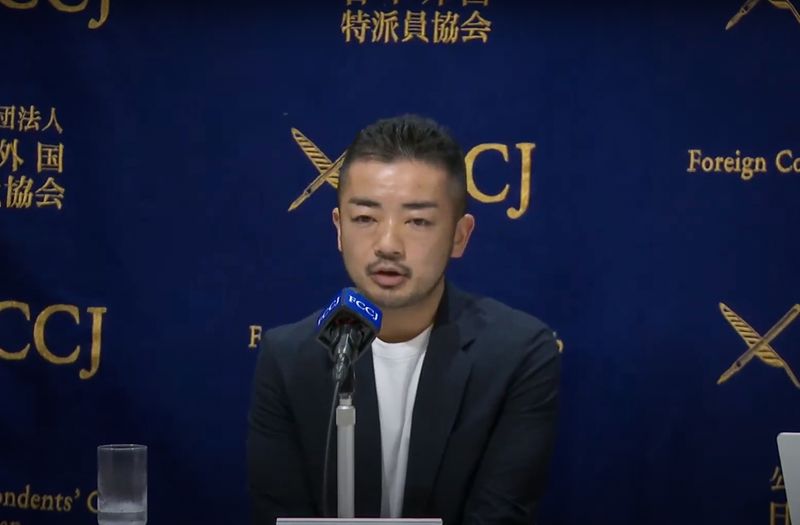
(Fumino Sugiyama speaks during a press conference at The Foreign Correspondents' Club of Japan in Tokyo on November 1, 2022. - Screenshot taken during online conference.)
If the Tokyo Partnership Oath System is to spearhead successfully efforts to achieve equality for sexual minorities and same-sex couples in Japan, LGBTQ+ campaigners believe it will need support from the private sector.
Speaking at the press conference, Gon Matsunaka, also a vice representative of Partnership Act for Tokyo, reflected on the potential impact of the capital’s partnership system on corporations and workplaces.
“Tokyo is showing leadership in that there should be no discrimination based on sexual orientation and gender identity,” Matsunaka said.
“This could create momentum among corporations aligned with the Tokyo Metropolitan Government to prohibit similar discrimination. Large enterprises with operations in other regions of Japan could promote these kinds of initiatives outside of Tokyo, too.”
Since 2012 Matsunaka has been working with the volunteer organization Work With Pride to support the promotion of diversity and the welfare of sexual minorities in the workplace.
Among other initiatives, Work With Pride has developed “pride indicators” which are used to evaluate and award company initiatives supporting sexual minorities in the workplace in Japan.
In 2021, 300 companies - with group applications bringing that close to 600 - applied to be considered for awards based on the pride indicators, according to Matsunaka.
“Life as a citizen is supported not just by the services of the metropolitan government but by products and services delivered by small and private enterprises. Unless discrimination is eliminated across all aspects, our lives won’t be afforded comfort and peace of mind,” he said.
“We urgently ask the Tokyo Metropolitan Government to reach out to business operators to raise awareness, starting from today.”
The Japanese capital brings the number of municipalities in Japan which have established similar partnerships systems closer to 240, with more than 3400 couples having applied for certificates through these systems, according to Sugiyama.
“With the Tokyo partnership system, coverage now reaches some 60 percent of the entire population, so this is a big step forward,” he said.
When asked what the future holds for younger sexual minorities in Japan, however, Sugiyama was more cautionary.
“I wish I could tell young people that the future is bright. I wish I could say that, but the reality is that Japan prevents me from doing so. This is all the more reason for us adults to fight hard for their future.”
Related:
Finding identity in FTM, Tokyo bar owner helps others take pride in theirs
Interview with FTM bar owner / DJ in Tokyo on gender change, LGBT scene, future for Japan


0 Comments