
Feb 6, 2026
Canola, more than just a pretty flower in Japan
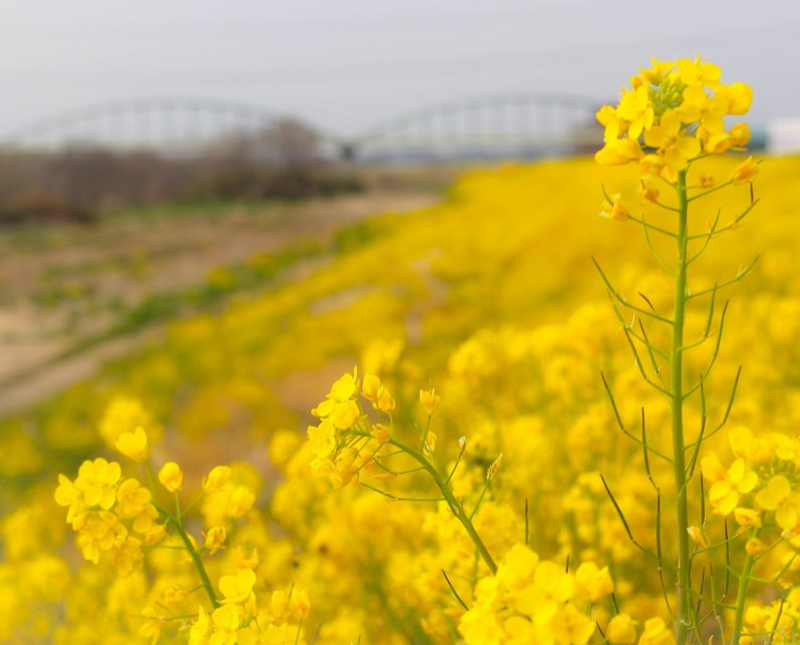
The flower of February 6th is the canola flower known as "Nanohana" in Japanese. Hereafter I call it "nanohana". Nanohana (菜の花) has a wonderfully rich life in Japan, far beyond just being a pretty flower, a harbinger of spring. It is a landscape flower that is even planted intentionally to boost tourism, with picturesque spots and even nanohana festivals.
In other countries, as much as Japan, nanohana is associated with canola / rapeseed oil. But in Japan, nanohana is actually eaten, and widely eaten too. The young buds and stems are tender, slightly bitter, and packed with nutrients. Common dishes include nanohana ohitashi, tempura and nanohana mixed into chirashi-zushi for "hinamatsuri", the dolls' festival / girl's day.
Other purposes of nanohana in Japan include environmental uses. For example, nanohana is used for soil improvement. It is also used for fodder and even biofuel. In addition, nanohana support bee health and early-season foraging. By supporting healthy bee populations, it in turn improves pollination of nearby crops and helps maintain biodiversity, while simultaneously attracting tourism in an area, with the beautiful scenery of fields of yellow.

Former nickname was "Saitama". Changed it to save confusion on place review posts! Irish, 20+ years in Japan! I also write on my personal website: insaitama.com

2 Comments
TonetoEdo
on Feb 6
Nanohana is a big deal in Chiba Prefecture, where it grows abundantly on the Edo and Tone Rivers. You can do nanohana ohitashi, blanched nanohana marinated in dashi and shoyu. It's a good in nabe hot pots, too.
BigfamJapan
on Feb 7
@TonetoEdo sounds like a delicious way to prepare it. In Saitama, the Ara River in particular the embankments are awash with yellow during the season.