
Nov 10, 2026
How to Check Your Residential Fire Alarm in Japan
Given that Japan is currently in a period known as Autumn National Fire Prevention Campaign, I thought it was as good a time as any to write about Japan's Residential Fire Alarms 住宅用火災警報器, which are often what we call "Smoke Alarms" in English.
As I learned today, smoke alarms are actually mandatory in Japan. Homes built from 2006 onwards were required to have them installed, while existing homes were expected to comply by 2011. Interestingly, the most recent statistics I found suggest that, as of 2026, the national installation rate stands at around 85.5%, meaning that not every household has complied with the requirement. Even so, the figure is much higher than I would have expected before discovering that smoke alarms are a legal requirement in Japan.
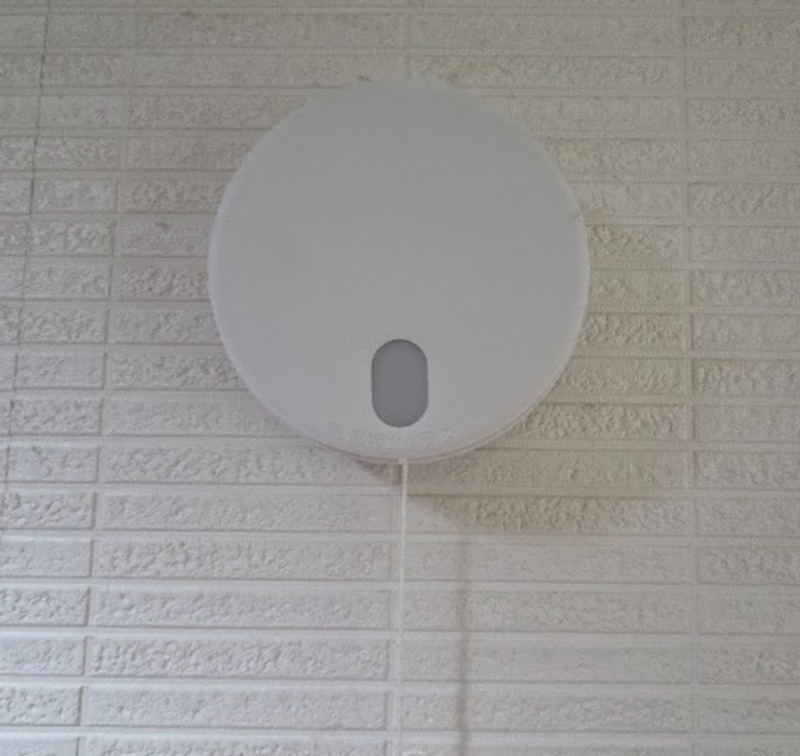
Most residential fire alarms in Japan have a test button. Pressing and holding the button for a few seconds should trigger a test message or alarm sound. Some models also have a cord or string that can be pulled to activate a test. If you hear the test sound, the alarm is functioning correctly. Ours is a woman's voice that says "seijo desu" meaning "normal".
Battery-powered units often provide a warning sound when the battery is running low. If your alarm chirps unexpectedly or does not respond during testing, it may be time to replace the battery or the unit itself. Experts generally recommend testing smoke alarms regularly and checking the manufacturer's guidance for maintenance instructions. The general guidance for completely retiring a smoke alarm, i.e. not just replacing the battery, and replacing it with a new one is about every ten years.
If you live in an apartment complex, rent or share a home, it is worth looking around the hallways and near staircases, to see where the alarms are in your building. Alarms can be surprisingly easy to overlook. You can use the test button, often a fingertip size circle, to check that it is in good working condition. If you ever here one repeating "pi-pii" periodically or saying "denchi-gire desu" it means the battery is low. For the record, if there is a fire, it generally repeats "Kaji Desu! Kaji Desu" meaning "Fire! Fire!"

Irish, Mom of 4, currently also living beside the In-Laws. 25+ years back and forth between Ireland and Japan! I also write on my personal website: insaitama.com

0 Comments