
Mar 20, 2026
More than just a flower; the significance of Paper Bush
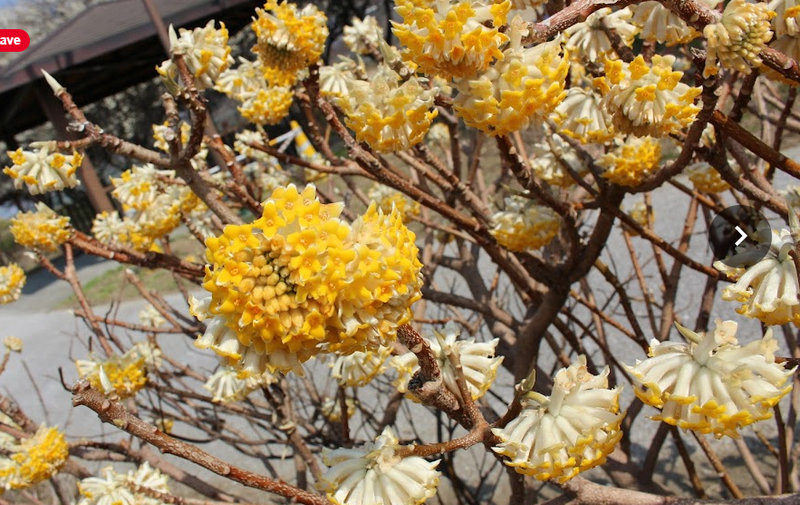
One of the birthday flowers of today, March 20th, is the Oriental Paper Bush, aka Mitsumata. But mitsumata is more than just a flower in Japan. In fact, mitsumata plays a very important role and has a very significant practical application in Japan. For it is one of the key ingredients of both washi and bank notes in Japan.
Mitsumata’s bark contains unusually fine, silky fibers that have a natural flexibility which bends without cracking. It is ideal to create paper with a smooth surface, soft luster, yet remarkable durability. These qualities made it one of the three classic washi materials, alongside kōzo and gampi, and the preferred fiber for high‑grade writing paper, calligraphy paper, and eventually Japanese banknotes. Even the 2024 batch of the newly issued 1000, 5000 and 10,000 yen notes used mitsumata as an essential raw material.
Mitsumata was introduced to Japan from China, but by the Edo period it had become a valued domestic crop. Regions such as Saitama, Kochi, and Shimane developed strong traditions of cultivating it for papermaking. However, nowadays, the majority of mitsumata used for paper / notes is reportedly imported from Nepal. But, even today, mitsumata remains part of the craft heritage of handmade washi and a raw material of bank notes.

Former nickname was "Saitama". Changed it to save confusion on place review posts! Irish, 20+ years in Japan! I also write on my personal website: insaitama.com

0 Comments